Showing posts with label chronic. Show all posts

Monday, July 27, 2015

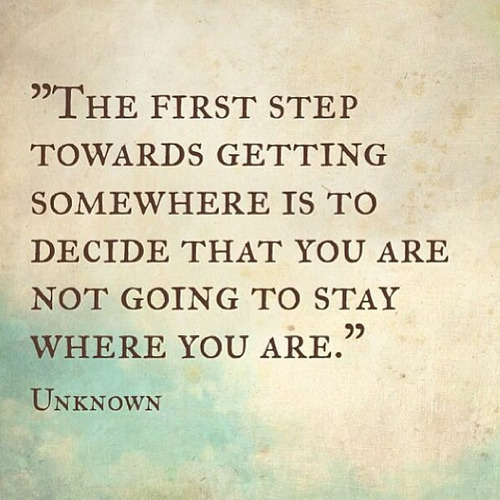
Defined by your disability? When chronic illness feels like it steals your identity....

image: Tumblr via Google Images

                                   
Some say what we go through in life has the ability to change our existence entirely. Sometimes, these momentous occasions are triumphant and positive. Other times, they are some of the toughest experiences a person has to get through and face head on. These moments can be short lived or linger in our lives for longer than expected. Ultimately, it is always up to an individual to decide in which category they have fallen into during any selective time period in their life. Sometimes little aspects can really distress us and other times it's the bigger aspects that truly rattle us. We all have a subconscious scale of what we find challenging as individuals in comparison to each other. One thing we all have in common in these moments, is that we are not told how to prepare mentally for these kind of arising challenges. 

These occasions have the ability to change you for the better but they also have the ability to shake things up in your life, leave you in distress, implement future worries and cause you to face a new reality. They can damage your confidence, change your personality and hinder your growth. This might not be obvious to everyone initially or even at all. I know from personal experience, that deep down, after a long time of living a certain way, a drastic change in life can sometimes make you focus on the negatives. It can rob you of your character and leave you feeling empty inside. However, despite these challenges, we always learn along the way. 

Up until quite recently, I would always state that I felt like I had lost my identity at 14 years old. The time where in my eyes, my life went on pause. My health was slowly deteriorating and I had no control over this aspect of my life. Health has always been wealth to me. Although I am very aware that with each passing day, we grow a day older and hopefully a day wiser, there are a majority of days in the week where I still can't find the correct tools and avenues to rediscover my identity. The thing that should be separate to my illness. I sometimes make the mistake of defining myself with my illness, it shouldn't be the case, but sometimes it hard to forget that we are still human underneath the exterior of a disability. I know that if someone who had an illness or disability expressed that comment to me, I would quickly point out all that I see in that person. Their personality probably being the focus, I'm sure illness wouldn't be the first thing that would even come to my mind. 

Living with chronic illness has been something I have faced for many years now. In all honesty, I often feel like the last time I truly 'lived' was before my teens. The fact I am only 21 is the bittersweet issue within that prospect. Disability and illness can take away the joy of life for some of us. We then find it hard to get back on our feet and heading in a direction we are happy with. The adversity of disability was something I never expected. I have always been a firm believer in accepting that what we go through in life, shapes us into who we become. I accept that process, but it doesn't mean I am always happy and welcoming of it. Ultimately, I am always optimistic that what happens is for hopefully a reason. 

How do we separate ourselves from our disabilities when they seem to have so much physical power and control? Your previous lifestyle is slowly but surely replaced with a pace in co operation to your disability. Your personality shifts with the adversity you face from your new found reality and any hobbies, interests or personal traits seem to fall to on the back burner. You feel like with each passing day you slowly lose yourself to your disability. It has the ability to make you feel like it is all that makes you in life and sadly, all that your world has become revolved around. I am forgiving in knowing this isn't completely through my own fault, illness has just made me lose my way and forget to enjoy life. I don't find that admission shameful, I know its more than likely at least crossed one other persons mind that is potentially reading this. I just think its quite heartbreaking that an illness can make somebody feel this way. No matter their age, occupation or lifestyle. 

Chronic illness for an incredibly long time has made me feel like all I had to offer was the pain and sadness it brought to me on a daily basis. The chaos of loss, confusion, isolation and sadness replaced the girl who was once felt like she had a personality with a slight sparkle in her eye. Illness has consumed me for over a decade now and seems to be the whole reason I am who I am. There are times I question who I have become, why my life is this way, why do I have a disability or why can't I live a life I am content enough with. Nobody wants to be on this earth to suffer, nobody wants to feel like they watch the world behind a window pane. We all want the best quality and quantity of life for ourselves and our loved ones.

At some point during our journey with chronic illness, the majority of us would have felt the overwhelming, smothering feeling from the realisation that we will potentially always live a life like this. A life of possible longevity, but with chronic pain, illness or a long term disability. It is from that point forward that you just feel completely lost in yourself and everything you once knew or thought you knew. It all seems so far behind you. It's a reality check because life suddenly really does drastically change. Before you know it, everything else does too. Illness drastically changes you as a person, in both positive and negative ways. Illness and your new found reality implement fear, even if you are trying to make the best out of a bad situation. 

It is common in chronic illness to feel the loss of yourself, your life, your normality and your independence. It's a complex lifestyle to adjust to. The biggest personal issue for me has been losing myself, my path, my happiness. It's not something that gets easier with time, the longer I live with illness, sometimes it's this concept of 'time' that causes more pain and hurt in my heart. I find it hard to recall the things I enjoy or have the potential to enjoy. I find it hard to think of aspects that I like about myself or that people like about me. You feel like you died a long time ago and some rotten disability replaced you in the night. It feels like health issues have now replaced or consumed Nancy. When it's yourself it's always so much more difficult to overlook the positives and indulge your thoughts into the negatives. No matter how many times a person may try to elevate your abilities to look past the thing that is holding you back. Let's be honest, it's a fact that we are always within our own company. We are often too hard and critical on ourselves.

I always remember in the One Direction 'This Is Us' film, Harry Styles stated that he hated the word celebrity. He felt it was superficial and made him less of a person, a stigma almost. I felt comparison in this comment to how I feel about being disabled and chronically ill. Illness has taken over me to the point where it has almost become my identity. The first thing that comes to mind when I think of myself is my disability. The first thing that others become accustomed to making conversation about is my disability. Usually because work or social related activities are currently not present. Sadly, it currently feels like my defining moment to date and I'm not always sure how to feel about it.  We all have the ability to be defined or looked upon as something, however I always wanted something more positive. Not a word I relate to mostly negative connotations because of what it has brought into my world. I am hopeful in the future, I can find something much more positive to correspond with defining myself, my life and my achievements.

Sometimes living life with a chronic illness or disability doesn't feel like it's enough. 'There has got to be more to life than my reality', is something I am guilty of thinking of occasionally. Lack of excitement, lack of joy mixed with goals we are desperate to seek within chronic illness amplify this feeling. Our days can feel empty and less sufficient than the average.  I would much rather a job be the most consistent thing in my life but I'm working with it. There are going to be so many days where you highly doubt your existence when it comes to illness, you can often feel like you waste your days just procrastinating in bed. Your purpose feels hard to search for. I feel so boring because I am housebound, if someone was to ask my what I like to do for fun, my mind usually goes blank. Fun? Does that word even exist in my dictionary. Not since I have become housebound and disabled, that's for sure.

You find yourself searching for the answers of what once filled you with happiness or even an escape from your everyday troubles. At times, these old things are difficult to attain in your present because they are no longer disabled or chronic illness friendly. Your physical limits have the final say on a lot of your challenges. Then you reach a dead end in hope. I know that there are multiple enjoyments in this world for people to continuously try and take part in, but when you live in pain, you lack the ability to want to try. Not because you are lazy, because you are drained, in pain and suffering.

I do however believe, there is always a positive, in any situation that you deem bad. Even if it takes you a good while to convince yourself of it. Although sometimes you may be drained by the process of what you are going through, these arising moments of our existence can also prove that you do have the ability to get through whatever life may throw your way.  It's not always easy, it's not always fair, it doesn't always make any sense but it is the present and it's all we have to work with. 

It becomes a case of remembering the aspects of life that are personal to you and not dictated by your pain, your disability, your health or your illness. Sometimes, I do find this aspect really difficult. What makes you, you? Try to forget the more obvious aspects that your illness controls. What do you enjoy? What makes you laugh? What is your style? What is your guilty pleasure? What is your movie genre of choice? Who's you favourite artist? What's you biggest dream? Who is your role model? What would you do for fun? There is always something you feel passionate about. There is always a quirk within your personality that others and yourself will eventually be able to see.

It's not always a simple task trying to recall who you once were before you became chronically ill. Illness has the ability to flip your world upside down when least expect it. It doesn't discriminate, it just happens. Chronic illness will impact your life for better and for worse. Things such as your personality, patience and your outlook change with each passing day. It's not a bad thing, it usually makes people have a greater understanding of what's important in life. 

Life always carries on, sometimes you are so caught up in your disability that many aspects of your life and personality dwindle away. It's not all negative. In the attributes I feel I have lost within myself, I have also gained in other ways. I am grateful for the positive personality aspects that illness has brought into my life. However, it's the darker and lower aspects that are more apparent and intense when you live with chronic illness. I can't stand and at times, can't cope with the isolation, the social anxiety, the fear of coping, the depression or the knock in confidence it has implemented into my daily life. 

On reflection, sometimes I wake up and instantly feel disabled. It's how I then personally define this whole day, which usually turns out rubbish because I let my disability win. In reality, I should accept this day for what it is and cope with the present. One of my strong points is that mentally, I don't often feel disabled. I feel like this is both a positive and a negative attribute of my thoughts. The negative being that I am not fully accepting my situation, lifestyle and physical weakness. The positive being that, as long as I continue to think this way, I won't be allow myself to wallow in self pity. I will still be able to push myself and feel like my goals are still half attainable.

I am still the daughter that wants to make my parents proud, I am still the friend who will always be there when I am needed, I am still Nancy, I just have to cope with a disability and I will hopefully be able to do just that. I will find things I enjoy again, I will find my way in living life again and I will be try to be kind to myself and this process of acceptance. We can make terrible circumstances beautiful in their own way. It's not always welcomed or suitable, but you can only work with what you are given. Some of us were given a disability, we just can't allow it to continue to define us. You are the only person who can discover the attributes that make you unique, despite your disability.

I have only just started to realise and accept that I am so much more than the symptoms and attributes of my disability. I need to remind myself of this and everyone else that too, even on days where pain convinces you that you are less because of the adversity you may face. I've tried to turn the aspects of my illness that I can into a positive, I like that fact that I can share something in my own corner of the Internet and hope that someone out there takes some comfort from my words. I hope that my fears within my own illness can make others more accepting and willing to work through theirs. Illness has taught me so much and has been the most testing time in my life. Like I said, I always state that I just feel like an illness, I think what I mean to say is I've always lived with illness, other than family it has been the most consistent thing in my life.

There is so much that we dismiss when we live in a life with chronic illness that we forget the simple things that make us human. We are quick to forget the positives that others are quick to see, even if we can't. In rational hindsight, we are so much more than out disabilities. They are a huge part of our lives, but they were not born and presented to the world, we were. Although it often may make me feel this way, disability is not and will not be the most important part of me. I would be quick to point that out to someone else in similar circumstances. 

I challenge you to ask or text your loved ones or friends. What do they think your best qualities and attributes are as a person? How would they describe you? I would bet that 99% of the responses wouldn't even mention your disability. If the people that we love can easily and positively overlook our disabilities, why can't we be as kind to ourselves?


Thursday, June 4, 2015

Rare Trips Out & Body Recovery...

     
image: Tumblr via Google images

Those with chronic illness know that a house bound life is no dream. It's physically and mentally draining to feel so stuck in a house when your body is too weak to let you go out on your own terms. Some days I crave the change of scenery other than the view from my bedroom window, which I have become accustomed to since I became housebound many years ago. Sometimes I crave the ability to just feel the wind on my face at my own peril. You crave the desire to live a regular life, be able to work full or part time, socialise on a weekly basis, do normal things and see what this world has to offer you outside of your front door. The reality of living with chronic illness is quite the contrast of being ' so lucky' that you get to 'rest in bed' and can be greatly frustrating at the best of times. Your mind wants to be living an active lifestyle but your body doesn't work as a team with this aspect.

Every small detail of a rare trip out is a military operation. Usually, starting the day with lack of sleep because of the pain that you may have experienced during the night, the preparation of getting ready to leave the house takes many, many hours. The time of leaving is usually pushed as far back as possible, my days usually 'begin' towards the end of the day, past 4pm if any plans can work that way. For a chronically ill person, firstly there is the effort and ability of physical attributes in order to leave the house. Showering or bathing, dressing yourself, applying make up, styling your hair, finding time to eat, taking your medication as well as finding the time to rest because of unwanted, unpredictable symptoms or drastic pain turns. Quite simply, exhaustion doesn't come close to all of what it takes a person to get ready to leave the house. The term 'start as you mean to go on' comes to mind in the form that exhaustion will then not be any easier from this point forward in order to continue your day. Although exhaustion has already hit by step one, all of these things are naturally things people do before leaving the house. It is truly taken for granted by healthy beings yet we sadly only know this because of living with chronic illness, if it was not the case, we wouldn't truly appreciate the ease and ability to get ready without dreading the upcoming activity. I honestly can't remember the last time I looked forward to getting ready or got ready with ease, it was probably a decade ago. All of the above and more will leave someone with a chronic illness, spoonless. This term is used for those with chronic illness to back up the spoon theory.

The combination of being in pain whilst outside of your comfort zone is something that is dreaded and daunting. My anxiety levels soar when out of my comfort due to pain.  I am quite good at coating how I am truly feeling when outside and around people who are not drastically familiar with my pain and symptoms. I find it's better to keep myself calm and hope for the best in order to not elevate any symptoms more than necessary. Pacing your day, from the minute you wake up to the end of the day becomes something you desperately cling to in hopes of making the outing run as smoothly and efficiently as it can with a chronic illness. It is a key element, but also a lingering worry in what may happen if symptoms take an unexpected turn for the worse. 

The achievement of a trip out is highly fulfilling in the sense that once midnight hits, you know you got through a rare occasion of finding the ability to push through and leave your home for some enjoyment or a necessity. A trip was managed, however painful it may have been, or however long you may potentially suffer afterwards because of it. In hindsight, it is something to feel proud of when you look back. It's a very big deal to somebody who is chronically ill to get out, whether they feel the need to verbally express this or not, inside they will be thinking and adjusting to just how big a deal it truly is. Not only on the toll of their body but mentally too. Although, it shouldn't be this way, we really are grateful for the times we manage to get somewhere, no matter the amount of work or repercussions that may arise from the occasion. We know how limited these moments become in our everyday lives and appreciate them for what they are, good or bad.

Even the ability to attend hospital appointments is consuming. Consultants don't realise how much of an effort it takes to get to hospital after the aftermath of getting up, getting ready and the journey to the location. Such an early appointment can throw your whole day in turmoil but you know it's something you need to push through. Finding the correct balance of prioritising your energy for trips out physically feels like old cast iron weight scales where you can never quite get the balance right. You over do it every time, but its hard to know what to use energy on or save it for when there is so much leading up to getting you out the door in the first place. However, you need to sometimes push yourself for your mental state and then suffer with the intense pain but understand that it was worth it. It's not right to feel like a prisoner in your own home and leaving your house is a necessity if you can manage to. Sometimes, I feel like I have cabin fever from being in my room for weeks on end and wish pain would ease for me to escape for a few hours.

You have so much desire to leave the house and see the world, however illness leaves you lacking in physical abilities and energy to do so. It's crazy to me that people can run daily errands alongside jobs, families and social lives and I often wish I was a part of that world. I often feel like a prisoner, then I feel guilty. My disability might cause me to be housebound, but there are aspects of my misfortune that make up a fortune compared to some. I am so lucky to have a bedroom with a bed, necessities in my house, a garden if I want some fresh air. In some parts of the world, others have nothing and I am aware of that when my thought process becomes that of a downer. But on the opposite, I am also living in a part of the world where everyday living is what we are accustomed and used to. Working, socialising and living is something we are lucky to know as second nature in a wealthier part of the globe.

Those with chronic illness will know that pain arises often from doing nothing at all, so imagine how it can get even more severe when we actually do something. If something feels worth it to you, then do try to push yourself in order to gain and achieve something or make a worthwhile memory. There are so many times where I allow my pain to talk me out of doing something, because it doesn't feel possible. Sometimes, I am right in resting and trusting my instincts and sometimes I beat myself up over not pushing myself to go. Having lived with chronic illness for nearly a decade, I have become accustomed to knowing my limits, gaining a better understand of my limits and being more accepting towards them. It is a working progress, like most cases of adapting. It's not a case of this aspect becoming easier, it's a case of accepting my current position in illness, which at times is easier than dwelling.

Ultimately, the repercussions of a trip out are never going to be easy to get through. Your body has gone through much distress from travel, movement, arising symptoms and the physical draining elements of a day in the life of coping with chronic illness. It can be quite mentally challenging to accept that a rare occasion out can leave you in so much (physical) distress. It's not normal or common to be in a position to not be able to leave your house on a daily basis. However, as hard as sometimes it may be to accept this, we have no option other than to try and not dwell on this. It is a case of it is what it is, if we felt healthy or able enough, we would definitely be able to be out more. No one chooses to be housebound and the majority of us will try our hardest when we feel able or if our illnesses potentially become more controllable in the future.

Typically, if I have been somewhere, this is how the next few days seem to look. The evening of arriving home, I am usually in tears. I feel like my body has been flattened by a road surfacer, run over consecutively or been in a high impact crash. Sometimes it can be painful to sit in the same position for a prolonged time, whether that be a car or a wheelchair. It's not something that many would take into consideration. Sitting in a wheelchair can often leave you in pain. Although it's more difficult, dangerous and draining to walk when disabled, sitting is painful on your legs, knees, back and overall body comfort. Considering my syndrome involves random joint dislocations, this is a difficult aspect to abide with in itself. I also notice a drastic change in my mood, it changes for the worse. You'd think that something so rare would make you be on a high compared to the consistent mood you become accustomed to when housebound. I always find that rare trips out make me think more about life and why those occasions have become so rare. I get back into thinking what I can't manage rather than focusing on what I can. It's a minor set back in my mental state but it's something that has always affected me. The parallel feeling of a high that you've succeeded in what you set out to do and the contrast of low, in feeling like what you achieved is something so simple to healthy beings. It's like you have been given a slight snippet of what life could and should be and then have someone take it away from you. Like dangling bait to a tormented animal.

Severe insomnia tends to kick in after a trip out. I only usually manage 3 hours of sleep a night and have done so since I was 15 now. However, I find when I have participated in something different to my everyday housebound life, I am so alert from physical pain that I can sometimes be awake for 48 hours straight. It's insane how you can be so psychically and mentally exhausted, yet also so awake from adrenaline occurring from the impact pain is having on the body. It's not a case of being able to rest fully for one day and your batteries miraculously recharging like a healthy beings would. I usually find two days after a trip out I am much worse and seem to be in a bigger flare up than usual. It feels like my body never actually recovers because of my condition. My limbs become incredibly swollen, heavy and hot and most of my symptoms go into meltdown mode.

The pain I am experiencing at this point leaves me feeling frustrated, snappy and short tempered without meaning to be, which is a quality I'm not happy with.There are times where the only way I can comprehend my pain is to have a good cry with frustration. Other times I feel anger or numbness. Pain makes us worthy of all of these emotions. With the extra pain that comes from a trip out, my frustration in my body's abilities and limits is something I question and feel anger towards. I often feel like I want my Peter Pan esque shadow removed from me to elevate how I feel inside compared to my physical abilities being held back as a disabled person. I shouldn't be like this because I know I am trying my up most hardest with finding a balance between my happiness and my disability. I need to work on being patient with my limits as well as continue with acceptance.

There comes great fear when you have been out and a couple of days later someone else wants to make plans with you. It always seems like everyone becomes 'free' on a week that you are finding illness and socialising extra difficult. It's hard for able bodies to understand how much just one trip out may set you back or just how much you will pay for it days and possibly weeks later. What I now try to do if occasions like such arise, is work with the person and try to adapt the situation to suit my needs a bit more. However it's hard to also make them feel not too bored or underwhelmed with the disabled friendly plan but they are usually understanding so that you don't have to miss out. There are other times where you just cant be bothered, you feel so drained and consumed by pain that you just simply, hibernate. Sometimes, you just don't feel it's worth the amount of pain to push through and that is OK too. 

I often feel like my body is failing me when further trips out seem to become more difficult to cope with over time. The question of why I can't manage an active lifestyle everyday is something I hope to get over in time. The repercussions of a trip outdoors may put me off wanting to carry on trying at times, however I know it's necessary for my sanity, happiness and life to carry on making plans when I can and seeking some enjoyment from trips out. I am working towards just feeling happy and content in the fact that I managed something without any disheartened feelings towards why it's not a common aspect in my life right now. Unfortunately, those with illness will probably suffer from a slightly strenuous outing. You may feel predominantly worse from a trip outdoors, but if it's meaningful and worthwhile enough for you deal with the upcoming pain, then it becomes a high priority in your survival of living with chronic illness.


Saturday, May 23, 2015

Monthly favourites - May - Chronic Illness Edition

I am an avid make up, fashion and beauty blog reader. Originally, before I contemplated starting a blog on chronic illness, I debated on focusing my energy into something similar to the above. However, there are thousands of amazing blogs already in that field that I felt I couldn't really compete with. It felt like a difficult task for myself to break into.

One of my favourite blogpost's to read and YouTube video of choice to watch is other people's monthly favourites. You get to see individual personality, different opinions, new ideas and find some pretty good bargains too! So, when I was thinking of what more I could bring to my blog I felt like I needed to start bringing forward aspects of what makes me happy when my illness feels it consumes every part of me, things I find comfort in and things that have helped me through my month.
From here on out, I will now hopefully be uploading three times a month and giving you,
 My monthly favourites

Obviously, I will try to base the majority of items around what I find has been helpful in relation to chronic illness and chronic pain. However, I will also be sharing some other personal favourites that I've found interesting too. Disclaimer- All opinions are my own. 


This book was bought as a gift for me for my 20th birthday last year. I've been a fan of Demi for many years and knowing that she had been through hard times, I wanted to take a look at her words of wisdom. Demi Lovato has had her own fair share of things thrown at her in life from a very young age, so she has always seemed relatable in that sense. However when I received this book, I was in quite a bad place with depression and anxiety. The feeling had been there for many years and I was struggling to see any positive path in life. I would read the quotes in the book but they would never seem to stick in my mind or make any sense to me at that moment in time. It wasn't until very recently where I had been putting into practise rational thinking that I tried to read through the book again. I have been working on trying to get my head space into a more positive and present way of thinking. Demi's daily chosen quotes are adapted and broken down into everyday life. I went through the entire book with sticky notes writing how these quotes connected to aspects in my own life with chronic illness. I like that Demi admits the feeling of struggle and welcomes the feeling of growth. It is something that I have taken inspiration from and continue to to try and adapt into my own life.

By chance I happened to start watching this show one sleepless, insomnia ridden evening and now I am hooked! Based upon classic fairy tale characters who find themselves transported to the real world with no idea who they were in their past, the story unfolds and is gripping. 
This is a must watch for any Disney or fairy tale
fan. I'm three seasons in now and have found its a great show that has been keeping my Disney World withdrawal symptoms at bay. 

Orthopaedic V pillow -
This has been my must have illness item since I was 15. Usually, its for people who are pregnant. However, when my mum told me to try this a few years ago I was slightly confused, I thought there was no way it would be suitable to my situation. Recently, after many years, I realised just how lost I  become when I am without this pillow. On a two week holiday, my sleep was even worse than at home. I was waking up with more neck and back pain, more dislocations and I couldn't get comfortable at all in the bed. I couldn't wait to return home to my own bed and my beloved V pillow. Even though it's awfully hard to sleep with chronic pain, at least you can get semi comfortable in you're own bed with your own comforts. This pillow is so soft and wraps around the shape of your body. I highly suggest anyone with Ehlers Danlos, back problems or nerve issues to try a pillow of this kind. It is worth the money to search for a long lasting, good quality V pillow.  Grandma problems indeed!

Warm Baths- 
Something so simple has nearly reduced me and my EDS body to tears of joy. If you follow me on twitter, you would've seen my tweet praising the Lord (and my handy dad) for my new bath that has been installed. Being a POTS patient, you don't know how life changing this is, it beats standing in a shower 365 days of the year and collapsing daily, put it that way. I was draining myself of limited energy standing in the shower every day, then fainting from my blood pressure and heart rate dropping, everyone with pots knows the drill of the dreaded shower. I can now soak my joints and muscles as well as not worrying as much about fainting in the shower. I am so grateful for this bath and to my dad for his hard work. This has saved me an extra pots episode a day.

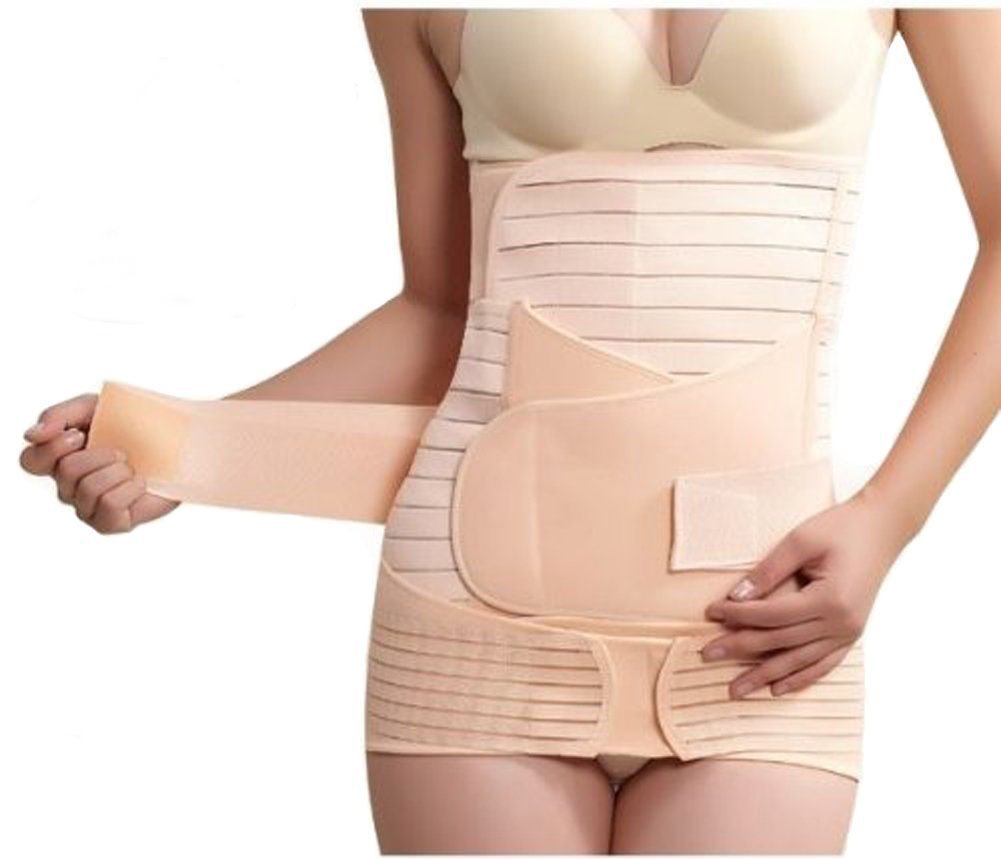
Post-partum Stomach Support 3 in 1 - Stomach, Waist and Pelvis 
I recently ordered  a new post-partum stomach splint. I've been a fan of these for over a year now and have heard that some EDS specialist physiotherapist's have recommended these to their patients. One of my main issues within EDS is my internal organ problems. The constantly shift position, drop, swell, move and are highly uncomfortable on a daily basis. I usually walk around with a pillow surgically attached to me stomach for some comfort. I ordered a pack of three from amazon, which arrived promptly. They really are such good quality, the best quality I've had and I've tried a lot. They keep position, don't shift up throughout the day and keep their stretch as well as shape. There is a splint for the bottom part of your stomach, a larger splint for the majority of the stomach (up to just under your ribs) and finally one for around your hips. It doesn't help with the pain inside the stomach, that is obviously still very painful, however this belt makes the organs feel more compact, as a normal body should feel. I feel like this keeps my organs slightly more supported and slows the digestion process down abit more appropriately, in the sense that I don't feel the organs move as much or the food and drink sitting too heavily in my gut when wearing this. These supports can also correct your posture, which is helpful when you are prone to dislocate and sublux.


Hope you enjoyed the first of this new monthly instalment on my blog.
 I am always interested in knowing what everyone else's' favourite chronic illness items of the month are.  Please feel free to leave your favourite items below.  

Tuesday, April 14, 2015

Grieving your old life in chronic illness....

Image: Pixshark via Google Images 

Grief is a natural process that occurs when we lose someone or something in our lives. I was never told by anyone in the medical field to prepare for grief when I was diagnosed with a chronic illness as a teenager. Instead I felt ashamed, frightened and less entitled to these feelings because I was still technically breathing and 'alive'. However, after many years of doubtful thoughts I realised I had lost something. I had lost something drastic in the form of my life, an identity, physical abilities and good health for the prolonged future. I had also lost my teenage years, friendships, a social life, my aspiring career, my ability to study, finding opportunities and most importantly, the ability to a quality of life. It was nearly my sixteenth birthday when I was told that my health issues were chronic and incurable. It was a whole cauldron of loss that unexpectedly arrived at a time and age where you are supposed to be discovering who you are as well as enjoying yourself.

A certainty in life is that we will all suffer with grief at some point, however illness can be a constant grief. To those who haven't experienced illness, the concept of mourning the loss of an old life before chronic illness arrived may not be envisioned as acceptable, or even possible. Especially illness on a chronic scale. However, the majority of us know it is not fair to physically compare the loss or coping mechanism of a person to somebody else who is also suffering a personal bereavement. Grief can come in all different forms, such as grieving over loved ones, pets, divorce, relationships, a job, financial woes. Grief shouldn't cause a person to be judged because there is no correct way, entitlement or category in which it needs a purpose.

There really are so many parts of dealing with grief, the five main processes being;
Denial, Anger, Bargaining, Depression and Acceptance 

There were many attributes that I went through over many years. Sometimes I felt all of these things at once, other times purely numb. Over my situation I have felt, anger, completely helpless, depressed, fearful, sadness, anxiety, low moods, loss of appetite, doubts and disbelief. Its is a consuming, drowning feeling. It's a constant weight to carry around, however realising it is all a process in your grief is a big step towards acceptance.

I was in denial for such a long time that my condition was actually chronic. Being told you can't be cured or really helped in an illness is a terrifying experience in life. For a long time I was so angry at what my situation had become, I blamed myself, my body, my genetics, anything that I could. However, there is no correct answer as to who or what is to blame for my health circumstances. It simply is a case of, it is what it is. I've come to realise there is no time limit on grief and no particular reason for it to consume you.

Upon reflection, because we are facing chronic conditions, there really is no time limit when it comes to the period of our grief. Sometimes it lasts a few years, a few months, weeks and sometimes we are reminded of it's presence every day. Anything can trigger the feeling. My own examples of when I am reminded of my own grief being, when I physically can see how different I've become to those of similar age, when I envision where I should be in life if I didn't have an illness, feeling stuck in my situation or when my body and mind feel like they've hit a brick wall countless days in a row. But typically, its usually when I'm having a really bad day with chronic pain and the realisation of how life has drastically changed through my illness.

Many things can effect the loss of life we feel and the reoccurring effect it may have on us. My own handling with grief comes in surges. Just like how we mourn the death of a loved one on their anniversary, poignant moments bring on all the old feelings of grief and possibly some extra on top for my increasing health problems. For instance, I find New Years really difficult to process.

Grief is draining, physically and mentally. There is so much that you lose, that just disappears from your life with a chronic illness. It has made me feel very numb, but at the same time distressed and unable to think straight. These types of feelings may convince you that you have mental health problems, but it also could be a factor or a form of grief. Nonetheless, grieving is a positive step, because you are being open to your feelings. The repercussions of shunning these emotions away in the long run usually ends with them exploding massively. Don't run from or block out your emotions. Find a way that you are comfortable with and that is suitable to your situation to confront it head on.

There may be examples that you may not deem worthy enough to feel sad over, however these things are very worthy of your emotions. You have the right to feel sad. It's important that you go through these emotions in order to get yourself in a better mental state towards acceptance. I really don't know why those with chronic illness, especially young teens and adults, are never told to prepare for the grief they may face. A brief warning on the subject may be what stops the cycle of despair and questioning for such a long time. It is something that is faced by everyone who deals with their individual illnesses and I am positive doctors are very aware of this. I do hope that over time, this changes and young people are prepared for and warned about the adversity they will possibly face.

Another process of grief is bargaining or wishful thinking. For example, praying for an easier life or for life to not be as bad as it seems. As well as feeling like you are being punished in the form of health problems. Not everybody is religious or spiritual and feels it is necessary to have relationship with God or a higher power. However for some, they really appreciate, find comfort and seek this within their everyday lives but at testing times especially. I'm not here to preach my own religious views, as I believe it's a personal choice as to what someone believes in. I wouldn't judge individuals in their reasoning for what they believe. However, I do believe I will find the strength to endure a hard life with illness, whether people think that comes from a higher power or within themselves is up to them to decide.

Even though those with chronic illness tend to live fairly isolated lives already, many of us end up isolating ourselves even further in order to deal with the grief. We can segregate ourselves in order to deal with what is on our minds in private, as well as our everyday pain. However, sometimes it helps as a form of release to share your feelings with someone you can trust. It may not occur to the person you are closest too that you may be facing this hurdle. They may not think this actually happens during illness. After taking a few years to actually accept that I was indeed grieving a loss of my life but especially my teenage years, I used this term to my Mum and she was instantly very supportive that in fact, this was true to my situation. Sometimes, I like to speak of what I am going through with someone close and some days I find it easier to process by myself. There is always someone to speak to in a difficult situation, even if it feels incredibly daunting. Speaking to those who you trust might be an outlet in releasing some of what you are facing or even speaking to a grief counsellor.

I'm not quite sure whether healing is a certainty in grief. When I suffered a personal loss of a really close family member a couple of years ago, I always tried to comfort myself and my family with the fact that you never get used to the fact they are gone or that you'll never see or speak to them again. That factor doesn't become easier to accept. However, you just learn to adapt to a new way of life without them. I believe this is true within chronic illness too, I can only hope that eventually we will all adapt and work through our grief of the loss of our previous lives. We will never be cured of grief, it is simply seeking happiness in ways that are suitable to our mind sets at present.

Through out my life, I'm pretty sure I've never never completely healed from what I have lost. However, it's not all negative. I am grateful for the emotions I have been through because I now have great empathy on a scale that probably wouldn't have hit me till a later point in my life. Although it was never easy, I'm grateful to have been through such testing times as these kind of hurdles put me in touch with very difficult emotions from a young age. I know that my illness has allowed me to relate and be courteous towards others of any age who may be struggling, for the rest of my existence. I'm sure many with chronic illness feel this way too. It's a strange limbo, weirdly all that causes the intense feeling of grief is actually teaching you one of the biggest learning curves mentally, in your life. You become stronger and wiser in the long run. A case of the good with the bad, if you can really look for the positive in the situation.

Moving on with life after grief is a difficult obstacle within illness. You can't physically change the way in which your health or illness declines, this is obviously something that we learn to accept will usually be at its own peril. This affects your day to day chance of "living" so engaging or creating an active lifestyle or social life to divert your mind is always going to be a more challenging step. Find the things that make you happy and that you feel are manageable within your circumstances. Aimlessly spending your day in bed when all you want to be doing is working hard,mixing socially and living is a hard cross to bear. You lack structure and routine in chronic illness however when you go through typical grief in life, keeping your normality is something that is pressured to be vital. Illness is very unpredictable and most of us are housebound, no two days are the same but one thing that is certain is pain. It's hard to find your new outlet of structure. There doesn't seem as many outlets to distract and divert your attention in illness, going out becomes increasingly difficult so you feel at a loss. A focus is good, even if you can't leave the house try to think of something you may find enjoyment in.

I think goal setting is something that is helpful in grief. Clinging on to hope of unattainable dreams, although at the start is something I may have attained to get back too, I no longer found suitable once I was confirmed disabled and chronically ill. I felt like it was holding me back more because I was pondering over what could be. I even found this dragged down my mental state. It is really sad to leave behind goals and dreams but I instead now want to focus on building adapted dreams or small goals. I am determined to find a new calling in life so to speak. As difficult as it may seem, try to find a new goal you can work towards with your disability, that is still in your heart but seems more achievable. Its always good to have a goal in life to work towards, the key in disability is making sure it's attainable and not impossible for your strengths and weaknesses.

You have your own individual battle with acceptance, adjustment and grief. You can feel these emotions for as long as you wish if that's what helps you overcome and accept your current position with chronic illness. It will always be highly valid in your journey, because it is an intensity of emotions and frustration from a significant loss in your life. I still deal with my grief. It's something I have accepted that will be a figure that swoops in often and when it pleases. It usually comes and goes during darker periods with my illness. I'm no longer frightened of this feeling as I know I'm entitled to feel this way. I know that the reasons I have these overwhelming surges are stemmed from illness and I deal with them as and when they arrive. Something that really helped me was knowing that the majority of others with chronic illness felt like this too, however that is only something I learnt along the way.

I thought that writing this post would make me incredibly sad and tearful, however it is something I've dealt with for such a long time that I feel more accepting to its presence. I know I will always mourn for what could've been in life, however I also look forward to what I can make for my future and my happiness. There will always be down days and I am aware of that.

For a person to find themselves in this kind of situation is not easy .Even if you feel like the grief cycle isn't completely ending, you may notice that over time you can go for longer periods without these consuming feelings. Like I've said in my "finding a balance" post, it is also important to deal with what is happening right now rather than looking too far ahead. Only those who have been through chronic illness will understand the grieving process we go through to mourn what our lives once were. Grief is a normal and an important process of living, especially when it comes to dealing with chronic illness. Without grieving for your old life or the life you craved, you won't accept your new reality and move forward positively and in a stronger mental state to deal with the future hurdles of illness. Finding a new happiness with your adapted life and a fresh outlook, as difficult as it may seem is the only option to progress in acceptance of your new way of living.


Tuesday, March 31, 2015

Comparing progress to others & forceful opinions in chronic illness...

Image - Tumblr via Google Images


One of the most beautiful things about life is that no two individuals on this earth are the same. This couldn't be more true when it comes to illness. My Ehlers Danlos Syndrome specialist recently said to me that she could have six people with my condition sitting in the waiting room and they would all be different within their diagnosis. Bare in mind that although we may be diagnosed with the same illness, we can be similar in our struggles, but we are not all the same case and do not have to fit into a certain box or a 'textbook fits all' scenario of what is expected in how we live and deal with our illness.

No two bodies who suffer with the same illness are identical. No one experiences the exact same pain. We all have different personalities, emotions, qualities, beliefs, abilities, thoughts, opinions, thresholds, the list is endless and extremely relevant to our individual stories in how we live and cope with our chronic illnesses. We would never be able to guess how somebody else manages to cope, juggle a certain lifestyle or live day to day with their illness because we are simply not living with their pain. Therefore, we shouldn't be scrutinised by ourselves as well as others for our abilities as individuals in our respected illnesses. There has been many times in the past where I have even compared myself to others in chronic pain. I ended up hugely doubting my achievements compared to those of others, however this was not a rational way of thinking on my part because we are all built differently.

In life we are all guilty of comparing ourselves to others. Whether that be someone in our class when we are children, our siblings or family members, our idols or those of similar age. We handle all aspects of life in different ways. We can learn and grow from our own experiences as well as the experiences of others, but at the end of the day, you are your own person and will only ever experience life through your pain and eyes. I have read many times of the dilemma in which people have felt the need to play their illness up to make it look worse in order to be taken seriously. This may be so they seem on par with someone else or so that they make others understand just how much they suffer. This never even crossed my mind to be possible or for someone to feel this helpless, but in the last year I have heard it many times. It's such a shame that those suffering with valid pain feel the need to go to these great lengths through fear of comparison but also, lack of compassion.

On the other hand, sometimes we can feel like we don't have quite the same abilities or quality of life as someone else with the same condition and feel extremely disheartened by the process. However, instead of making ourselves feel worse in the form of our focusing on our disadvantages such as, being annoyed over what we can or can not manage, that we feel we are not as ill or more ill than so and so, that we have more bad days than good, we should instead try focusing on what abilities we are not giving ourselves credit for. The smaller things that might not mean much to someone else, might mean the world to you. What we manage in life with illness is not only a great effort but an achievement in itself. I sometimes mentally don't feel satisfied on impact by what I have managed, but on reflection, I know and have to remind myself that it's actually a huge achievement for my body to cope. Only an individual can realise these personal hurdles.

I will say, the chronic illness or 'spoonie community' as it is commonly known is a mostly positive and highly supportive place. People are caring, kind, there for each other and friendships are built on the base of relating to living with chronic pain. However, in the past I have experienced opinions (which we are all rightly entitled to in life) delivered in a condescending, belittling or rude manner that almost seems like a slight dig towards others. Mostly, pushing of a lifestyle or way an individual deals with their chronic pain onto another. I'm sure it is meant kindly, online we take from things what we wish from a simple text, but people who are in a sensitive position such as chronic illness or disability can often take it the wrong way. 

Nobody knows how much an individual is struggling physically or mentally, it pains me to see people forcefully dictating to others what they should or shouldn't be doing when it's not their life. Just because one thing, treatment, medication, attitude works for one person doesn't mean it will for you. So you shouldn't be made to feel negative or any less entitled to feeling ill or your pain just because it doesn't work for or is a part of your journey at this moment in time. It is up to the individual in pain to decide what they can and cant manage. As much as they will be grateful that you care enough to suggest, its all about the delivery in how you express your thoughts. It's not just a simple case of why don't you try this or that, its maybe because the individual in pain doesn't feel physically or mentally able to at this moment in time. They are not being negative, they are just trying to cope with how they see fit.

For instance, a brisk walk might feel like it works wonders to one person, however for someone else it might feel like they are causing more pain or damage to a broken body. Some may think stretching helps them have more stability, some may not. Other examples I see being dictated as 'key elements' in progressing your health range from hydrotherapy to dietary changes. While these resources are available, I think its up to the individual who actually lives in pain to decide what they can and can not do, what they want to and don't want to try. I know that those suggesting probably want to improve the quality of life for the person who is ill, however being too forceful in what they deem 'correct' makes those suffering with illness not willing to be as open minded to these options. 

Something those with chronic illness struggle with is receiving comments from those who do not live with chronic illness but assume that something will 'cure them'. When I hear people saying that their parents, friends or colleagues think they don't try hard enough or push themselves enough I often wonder if those making the comments take into consideration all aspects of their illness, or if they are implying a standard one remedy must fix all type of opinion. The added extras being things such as, extreme chronic fatigue, physical chronic pain, dizziness, being able to stand up without fainting and much more. There are many different various symptoms in an illness, with some affecting an individual and some not. We are all individual and will all react differently to our hurdles. 

In the past I have even received similar comments myself that stem from good intentions but are just delivered completely wrong. "You need to try harder, you need to help yourself a bit more, if I was ill I would try anything to get better". These comments might be intended to give a little push in order to change or improve your quality of life, however in incurable illnesses and disabilities, sometimes this can feel more frustrating to hear because we know the inevitable outcome. Implying that we are not helping ourselves when you don't live with the condition is wrong. It's nice that some care enough to be emotionally invested in our pain, however it's easier to push as someone from the outside looking in than it is to be the person living in the pain.

It is still positive to offer support and suggestions if you are in the same boat. Sometimes, its what people really need to hear. If you find hope in an outlet, do share what worked for you but be conscious in the delivery you give without sounding too forceful. By pushing an option onto someone based on the fact that it gave you positive results, it can often make an individual feel like they are failing if they don't gain the same benefit. There's many trial and error attributes with chronic illness and only the individual can find the solution in what will help aspects of their symptoms. For instance my own trial and error has come in the form of, my diet being constantly changed since 13 in hopes of lessening some of my stomach symptoms, finding great difficulty and lack of progress in my physio sessions in the past, swimming pools having a very bad affect on my autonomic dysregulations. However I do understand that the options above that haven't worked for me, may well have a rather positive effect on many others. In illness you feel a loss of control, of your body, your situation and your life. When people with illness imply they don't want to try at the moment, its not that they are completely shutting the door on that option. It's trying to express that they will look into trying these options but on their own terms in time.

In some situations, some of those with chronic illness do not have a support system at home or around them. Illness is terribly isolating and these individuals need to feel empowered and like they have someone on their team. I feel so grateful when someone feels courageous and willing enough to share their pain, troubles or ask me for advice within their journey with chronic illness. There is no feeling like being trusted and supported whole hearted by a person. Everyone's battle with illness is different, everyone has different strengths and weaknesses, everyone is unique in their struggle. Different people will have different thresholds and we should only try to lift each other up. Praise being a huge focus, not only to each other but ourselves for our achievements, big or small and continue to inspire without belittling or boasting. 

There really is no right way of dealing with chronic health problems, there is no manual you are handed to tell you what you should or shouldn't be doing. Illness is unpredictable, it will never be a textbook fits all type of scenario, what works for one won't necessarily work for another and that's OK. As good and as positive as it is to continue sharing the available outlets of pain relief to exercises, coping mechanisms to positive thinking, YOU are the boss of your own journey. Build your own blocks, set attainable goals and continue to be open minded to finding ways in which you will hopefully progress and help your symptoms. 


Sunday, March 15, 2015

Using A Wheelchair - age, confidence & more....

image: lovethispic via google images

It's hard for myself to believe, that from the age of 17 I have been wheelchair dependant. It's an aid that is meant to make life easier for those of us who are told by doctors for the sake of our disability to be using one, but with this comes so many emotions and worries. Again with the majority of aspects in chronic illness, there's a lot of reflective thoughts such as:

"Why me? Why can't I have the same physical tolerance levels as others? Why can't I be like the rest of my friends? Why do I need this wheelchair so badly?"

These questions don't have direct answers, more so answers we wish to hear to ease our pain in the reality of the situation, yet they won't physically change the attributes or the true reality of our everyday lives living and adapting with disability. If anything, they hinder our growth in acceptance of the process.

Although some may assume incorrectly that the issue must be with your legs when you are dependent on a wheelchair, consciously you need to remember that this is the misconception of wheelchair users. Yes, some people are in wheelchairs because they are severely disabled in many different forms. However, others using wheelchairs don't have to be in one because they are paralysed. They can be in wheelchairs because they can't walk distances, long or short, because they faint, because they are too weak for their body to carry them, because they dislocate, because their bones or muscles are fragile, because they have chronic fatigue forcing them into a zombie type state where it's more than difficult to function. There are seriously so many reasons for a person to be in a wheelchair other than what is drilled into us from a young age to deem correct.

When you become chronically ill and a wheelchair comes into the equation it is very hard to get your head around. How you can go from being able to walk your dog a short distance to becoming bedridden and unable to leave the house without this very obvious and physical object all of a sudden. Especially when growing up you only assume that elderly people should be using wheelchairs. It's something I was hugely embarrassed over and couldn't comprehend for many years. I didn't know of a single person who used a wheelchair, let alone a young person. It's something that not a lot of people surrounding you will go through at a young age so it is an abnormal situation to find yourself in.

Wheelchairs don't always phase people in illness, possibly because some can accept the fact they need one pretty fast and won't let it stop them from doing or achieving what they want, which is fantastic. However, for me I always disliked the thought of giving someone a reason to stare. I hate the attention you receive when in one, I hate to be pitied and looked at, I hate the stares you can receive or puzzled faces as you are wheeled past others. I imagine what others may be thinking, young people especially being my concern. It's horrible to feel so obviously different to others your age. Do they see me as weaker than them? It's a situation I don't really know how to accept or adjust too. Only you will understand how drastically your disability affects your daily life, yet a wheelchair makes it more than obvious to strangers, let alone close family or friends who may know of your health issues.

 I often have an overwhelming fear of being seen out in my wheelchair. On one hand, I know how desperately I need it. I want people who I am close too to clearly understand I am not quite able to keep up with their level of abilities but on the other hand it brings me such a feeling of vulnerability. What is strange is that for the majority of the time, I have no problems mentioning I am in a wheelchair to whomever it may be. It's not something I feel ashamed to say, but it's something I feel self conscious of being in and using. Especially local use of a wheelchair. I think this is something to do with seeing people I 'know of', it gives me a great deal of anxiety so I like to protect myself and my vulnerability. My mum often says that it shouldn't make a difference if I was to see someone I know, because if they was a friend they'd know that I was already using a wheelchair and therefore I shouldn't worry if they had an opinion on the situation because they are not a part of my life. Like most, I have always been told that the older you get the less you worry about what others think of you. I'm not quite there in the slightest but you do grow as a person slowly but surely and only time will tell.

In the past I was making outings worse for myself because I was struggling a great deal to keep up with healthy beings, yet I was just so anxious over seeing someone I knew whilst being in my chair, so I would wrongly convince myself I could actually walk and stand for prolonged lengths of time and instead suffer the major consequences. With my illnesses (Ehlers Danlos Syndrome and Postural Orthostatic Tachycardia Syndrome) standing, being upright/on your feet and walking on weak joints, muscles and tissue is not helpful to the body with the symptoms that arise. It causes more damage in the long run to be walking around on our limbs that just are not strong enough to cope with this kind of strenuous physical activity that so many take for granted. We all need to remind ourselves in moments of doubt that our wheelchairs or our scooters are an essential aid for us to get around because our bodies are too weak. I personally saw my wheelchair as something to make me ashamed rather than embracing and accepting the fact that it could help me.

A wheelchair is actually for your own safety. People are less likely to knock into you or cause damage to your already fragile body. In my illness; I dislocate without any warning. I also pass out when blood pools in my legs, therefore not making its way to my heart and pumping overtime in order to reach there. Wheelchairs can lengthen the time you manage to be out, they do not in the slightest ease the pain you may already be in but they can help to preserve your energy. There have been times in the past where I have been out and after 5 minutes I am exhausted or feel faint and have had to resort to sitting on the floor because of lack of chairs around. It sometimes takes a scary experience to realise that it's more than beneficial to be in something that is causing you great fear.

 Obviously the reason most of us are housebound is due to high levels of pain so sometimes we are unable to leave the house full stop. However of course l would like the confidence to be able to get out more in my chair. On days where I feel up to pushing myself, I would like to not be embarrassed to use my wheelchair. Although, I will say that the worse my pain and disability becomes the more accepting I become of my wheelchair because I know it really is truly necessary. I know that I can not physically stand a walk a distance greater than a couple of metres without an aid.

I've since stated taking baby steps. The more I go in it, the more my confidence grows and I become more at ease with the process and I really hope this evolves positively over time. Although the amount I physically am able to leave the house is minimal, when I do the wheelchair is now always the option. I now have taken my wheelchair to 5 concerts over the last year. Considering I would not even have the confidence to use it in England because I was embarrassed, I seem to somehow dig deep, find some confidence I didn't think was there and sit in it with thanks to those around me telling me to not be frightened to use it. I do notice it preserves some energy, it doesn't stop the pain, in fact it can sometimes be quite uncomfortable but I do understand that it is necessary. I also take it to hospital appointments as the building is usually huge and far too long a walk. Other than that friends visit me at home so what I do manage is catered to my disability.

There shouldn't be a stigma to young people in wheelchairs or at least so many of us feel like there is. Being young and using a wheelchair, although something that may not seem as largely common is also a necessity in your quality of life when you have a chronic illness. Confidence will always come into play for those of us who lack in this area, but try to keep perspective. A wheelchair is a tool to get you out more and help improve your quality of life. Don't make the mistake I made by being frightened for so long and putting off using your wheelchair through worrying of others opinions. Will you see those people again, probably not. It's a huge achievement to use your wheelchair when you feel like you don't have the confidence and how anxious it may make you feel. There is nothing to make the situation any easier to accept other than the fact that you NEED the wheelchair, for your own safety, it's a necessity despite how stubborn or against it you may feel.


So here comes a challenge!
 I challenge those of you who have a wheelchair but are too frightened to use it in public, to use it when you next manage a trip out. Rather than think of the negative thoughts the wheelchair may arise, instead focus on the positives e.g energy/fatigue levels. For those who use a chair frequently but tend to look at the floor (I'm talking to myself here too), see how many times you look up when going past groups of people young or old in your chair.


Friday, February 6, 2015

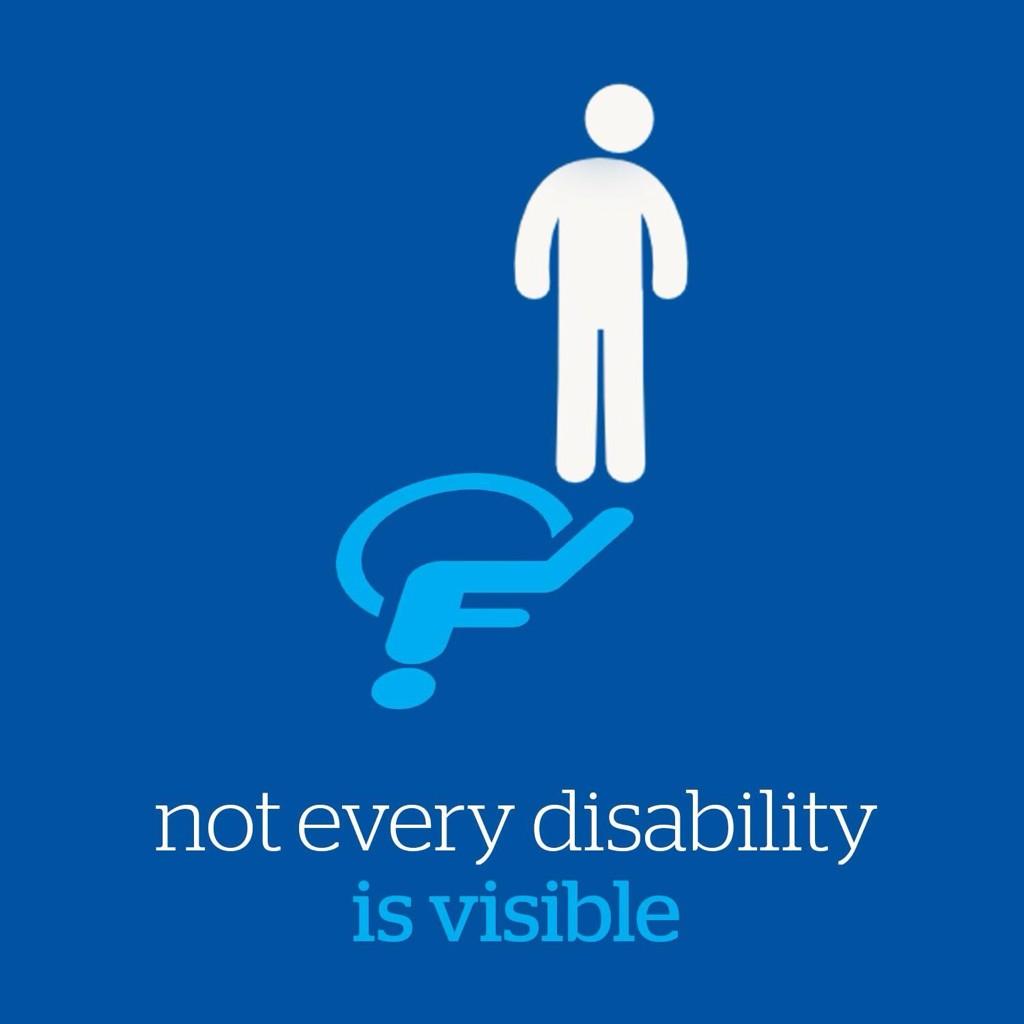
The injustice of living with chronic invisible illness

Image: Remap UK Twitter via Google Images

In July 2014 I posted a detailed blog post on 'The frustrations of a chronic illness'. This post went down surprisingly well. I wasn't expecting half as many of the views that it gained. I was overwhelmed by the amount of comments, shares, re tweets and most surprisingly even a Facebook share from the website Inspire (which my mum has been an avid reader of for many years now), that it received within a few days. It felt so good to know that what I had written had possibly struck a chord with some people and they too felt all or some of what I had spoken about.

This is a subject that doesn't really disappear, so I felt the need to write another post based on the injustices that come along during chronic illness in hope for it to add towards a continuous movement in the process for those of us who have an illness to stand together to make a change. If we go quiet about this issue, it's not going to take us any further in progress or get us noticed in changing the world's perspective on how illness can affect young people, teens and those with rare disabling health issues in more ways than imagined.

Whether it be that we are feeling judged or being verbally judged by others it's something that is difficult to just accept and be OK with because quite frankly, it's not OK. A lot of opinions and frequent comments received are based on how well you appear to look on the exterior standing or sitting there in front of someone. It's as if make up, a smile or your personality must mean all is well in your life. In some circumstances this can be a good facade, however when the comments seem to be constantly given, it can begin to grate on a person a little. This is based on first hand experience I received in previous years, it's often upsetting, unkind and unfair yet we are often put off defending ourselves because it can feel like losing battle.

Being told 'you look well and you would never know you are sick' has always felt like a back handed compliment to me. I know people mean well however it makes me feel like because my illness is rare and misunderstood, it's also maybe slightly irrelevant to others. Those commenting on your looks don't see that everyday is usually a bad day, low mood, the effort it takes to complete the smallest tasks and the amount of medication you possibly take during your day to day life. They just see the present you, who is usually vacant from all the pain you are trying to comprehend and cope with. Pain that can often force you to live a life with limitations, yet there is no obvious sign of this to others.

Hopefully, in time, I may grow a thicker skin towards these types of assumptions. Obviously this isn't necessarily an insult to some in life, some people can find positive aspects in these comments, it can sometimes give them a boost. However on the opposite end of the spectrum, I know for many of those that are chronically ill, this process really can be seen as a sign of dismissal. I have come to gradually understand that for those who struggle with people not understanding, we don't actually need to convince those who don't believe in our illnesses of 'our world'. They will most likely never understand. However it's through learning and hearing of the misconception on invisible illnesses that it can affect us as a whole community emotionally.

You often hear many horror stories of how people with 'invisible illnesses' have parked in disabled bays and had inconsiderate members of the public make an assumption based on how they look physically and therefore make a scene over how they are not disabled and not entitled to park in a bay. I personally (and fortunately) am yet to be in such a situation, I do have a friend with the same illness that has. I often wonder what these kind of people deem 'disabled'. People often appear to instantly dismiss that your illness could be as bad as you say or describe because they can't physically see it, until a wheelchair or aid is physically involved or seen. Just because on the outside you may look young enough to not be 'disabled' doesn't make you fit, healthy or able and its a shame this isn't something that is one of the first things to enter a persons heads or seen as being possible for young people in this day and age.

Things such as fatigue, weak joints and muscles, breathing and lung problems unfortunately are not physically obvious but valid reasons for being disabled. I would express how it is quite sad that there is a general assumption that young people can't actually be disabled if you base this on the assumption of looks. Maybe if they spent 5 minutes with the person they have judged they would see that actually their invisible illness limits their abilities in a short period of time in daily life.

With rare illnesses, there comes the battle of finding the correct doctor with enough knowledge for you to reside under their care. During appointments, you ask for the help of tools for you to gain a better quantity of life. In my opinion these include, medications to help ease or slightly suppress your pain in order to function better, specialised physios and local support and knowledge from a GP. There never seems to be enough specialised care available to those who suffer with debilitating illness. People travel up and down the country to attend a 20 minute appointment a few times a year with a specialist consultant. You often wonder how you will ever have the correct care plan or tools to gain a better life with such limited options available. It can be infuriating to go into an appointment and feel like you haven't progressed or achieved what you aimed. When you tell doctors what your life has become (bed bound for the majority), you are referred to things like the mental health team or anti depressants instead of support of a specified care plan.

Then there's the injustice of the social aspect of your life once you become ill. You miss out on things that are common in everyday life. Your ability to socialise is usually interrupted by being unable to manage your pain and fatigue, you lose friends and you often feel like you lose sight and a part of yourself and a common reality. The ability of feeling like you have a place in the world other than just being chronically ill or disabled can often plague your mind. Your independence becomes slim to none, you have to give a lot of things up but still have the mentality to achieve. Like I have said on twitter, I truly take my hat of to those of you out there who still manage to attend school, college, university and work. I seriously think you are all amazing and inspiring!

Your health problems will never just disappear from your life, in fact when something feels so obvious to yourself yet invisible to others it can often make you rather down and depressed. Pain is a constant thing you are dealing with every minute of the day, in fact in some cases our illness is actually the most consistent thing in our life. It is certainly mine. So the fact that this isn't obvious to the eye can make it harder to cope when you appear to be 'normal'.

  Pain intervenes with 99% of the want,will but most importantly the ability to do things. However the scariest factor is often that this is a daily process that we must go through and overcome.  


Monday, January 19, 2015

Don't give up hope....we will find a balance eventually.


Image: Tumblr via Google Images 

The post below is something quite different for my blog. I wrote this post in the depths of a very low mood one evening in hopes that it could give an insight into those really bad moments that can come when chronic illness or pain gets the better of our mental state, convincing us of only the negatives within our situations. On analysis writing this intro almost ten days later, the mood didn't stay with me as long as it would have in the past (which would have been weeks), which can only be a positive progression in my life.

Whilst I have been taken into consideration methods to try to adapt my thinking patterns into a more positive nature, we are all human and we all have those days where we feel down and sad for no apparent reason. We digest these moments in our own ways, sometimes its easy and sometimes its difficult. Right now, I am processing one of those more difficult moments. The pain from my illness, the drastic feeling of loss in my life, the lack of ability to discover who I am separate from my illness as a valid person seem to be the main driving forces behind these moments, at present.

As I have said before, these occasions used to be very frequent in my day to day life. I would break down a large amount of times during one day, my panic attacks were rotten to the core and I was experiencing them every 20 minutes on my lowest days. Although they still simmer daily, they are now thankfully not as bully like in their nature. I try to not let them drag me in like they once did, however sometimes there is no stopping that process. It's not something to be ashamed of, it can be frightening, lonely and intimidating, but the moment will always pass no matter how bad it may feel. It may feel like you will never get through those attacks, but you always find the strength inside to do so.

However, as I type this post, it's just one of those days. We all have them, we all have to go through them as tricky as they seem. Even though I will most probably post this at a later date (right now it is 23:20, Thursday December 18th 2014), I thought this would be a great chance to just write down exactly how I am feeling in this moment because of my illness and life in general. I'm hoping because this is in the heat of the moment, I may capture just how raw the heights of emotions can begin to stem from, sickness, pain, illness and isolation from the perspective of someone with a long term chronic illness and disability from childhood.

Today has been a strange day, fatigue has been a struggle for the last couple of weeks. I seem to be waking up tired and in discomfort, which is therefore making me sleep until the early afternoon. When I awake and finally get myself together, it is basically night time again. The nerve pain in my back has been quite uncomfortable with movement. My finger, knee, hip, ankle and shoulder dislocations and subluxations have been rapid and like usual my internal pain has been severe. The smallest tasks are proving more difficult than usual and I have a heavy amount of life reflect with times like this. I hate that chronic illness can rob you of a life you planned or dreamed and the ability to be able to function like a normal human being. It's more difficult accepting this because I am only 20 and have lived this way for longer than I envisioned.

Although I haven't shed a tear, I am just processing, keeping myself to myself locked away in my bedroom. I become very withdrawn in these moments and avoid everyone physically and in any ways of communication through my phone as the day has gone on. I hate to be pitied or babied and I get very angry at myself now when I bundle so many things on top of each other and let them all get to me at once. I know I shouldn't be angry at myself, we are all eligible of these moments however we are our biggest critique at the worst of times. I'm trying to figure out what exactly is stemming this low mood, it's possibly a bad mixture of all of the above. I seem to be at a loss with the thing I have become quite good at, analysing and breaking down the situation. Even though I have broken the factors down above, I still cant put my finger on exactly what is making me feel this empty.

I remember when I spent some time on a pain management programme, they said that my way of handling my emotions in the height of a teary stage or panic attack wasn't always correct. I tend to lead more to a distraction when I feel really low. I listen to my iPod mainly as a way to visually conjurer up something more pleasant in that moment to focus on, yet the feelings or thoughts will then always return soon after, often surging more abruptly than before. I thought that the best solution was to attempt to get as far away from my thoughts as possible and that the advice they were implying was incorrect for my situation. I felt like I was dealing with it best by 'escaping and replacing' my low mood. Two years on I think right now it has just clicked what they were trying to get me to understand back then. The more you push the thoughts away from you, the bigger it builds until it implodes.


Tons of questions can fill your brain at these low moments. My own tend to be;

 Am I happy that this is my situation? No. Am I frightened that this will be what life is like forever? Yes. Am I worried I will not be able to achieve my goals in life? Yes. Do I acknowledge there are many other people in this world in worse situations? Yes. Do I feel stuck? Yes. How do I change these feelings? I really don't know. How will I progress? I don't know.  

I can see clearly now, that what I am doing in this very moment counts as a distraction, yet it's a positive distraction because I am in fact dealing with the issue and processing the thoughts that are making me feel so low, in order to leave them behind and not bring them into tomorrow. I am focusing my energy into tackling the problem head on, rather than pushing it aside and letting it arise again in a few hours. In the past, how stuck I am feeling in my life would've been on my mind for weeks on end. It was so miserable to carry around. I definitely think of the same thought often, however I am quick to remind myself that there is nothing I can do about it right now and to just try and focus on today once I have broken these thoughts down in a rational manner.

There are so many attributes in being chronically ill that scare me in life, there are so many unanswered questions, so many worries, so little quality of life, yet the more I think of the bad points, the harder it feels to cope. This always makes the process seem incredibly over whelming at times. Sometimes it's easier to not over think life and just take each day as it comes. Sometimes I feel so sad that my life is like this at such a young age, that illness robbed me of all of my teenage years, but then I remind myself that there is a flip side to this. I still am so young, young enough to achieve, young enough for there to be a hope for life to change and young enough to find myself a balance. It's often difficult when life and countless days or months pass you by in illness, but hopefully our time will come. I hope that in my moments of despair, this sentence can strike a chord with me and remind me that life still is possible, I just have to build the blocks very slowly to find my way.

Since I have come back to edit this post, many more of these moments have occurred, the panic attacks have been in full swing, the despair has been a permanent figure in my everyday life but like always, somehow when the odds feel against you, you manage to pull through. I decided on uploading this whilst in a down phase because I needed the reminder of where I need to be heading in life. Trying my best to remain, optimistic. Not necessarily forcing myself to be positive over my situation, but optimistic that I can still achieve goals, find happiness and find a quality of life I no longer feel depressed over. A steady balance I feel my pain can work with. At the moment any sort of a life is non existent, which is something no doctor, illness or fortune teller can prepare you for. Depression is a common illness when you are chronically ill, nobody wants to live a life in daily pain, it just so happens that we don't have a choice in the pain aspect so our mood is often sacrificed.

I hope that although I am not on the path I intended to be at this age, nor where I want to be right now that eventually, I will find my way onto a path that I will be happy with, grateful and thankful for. Most importantly, when I eventually look back on life in a few years, I hope I will understand why things turned out they way they did. Furthermore, because of the way I have been affected in my daily life and well being since I was a young child because of poor health, the more determined it makes me to want to raise awareness for Ehlers Danlos Syndrome and Postural Orthostatic Tachycardia Syndrome and get these illnesses out to the public for awareness in hopes of bettering all of our lives, medical care plans, knowledge on these illnesses and making us less invisible for our futures.

Granted it's not where I want to be in life right now, its possibly not where many of you want to be in your lives either. Life isn't always fair or smooth sailing for any of us. I'd like to be optimistic and hopeful that I am in this situation for a reason, that reason may well be that my health issues allow me to have this blog and give me an opportunity to interact with others in similar situations who can help and support me in bigger ways than expected.

I think we all sometimes wish we could run from our illness and problems when everything builds up. A place where chronic illness doesn't exist, but unless we have body transplants, that isn't possible. However I know we will all find our individual balance eventually. I don't just think I will find a balance, I am positive I will find one, because its the only choice I have in order to be happy in a negative situation that is chronic illness.